 Blue Book Nights
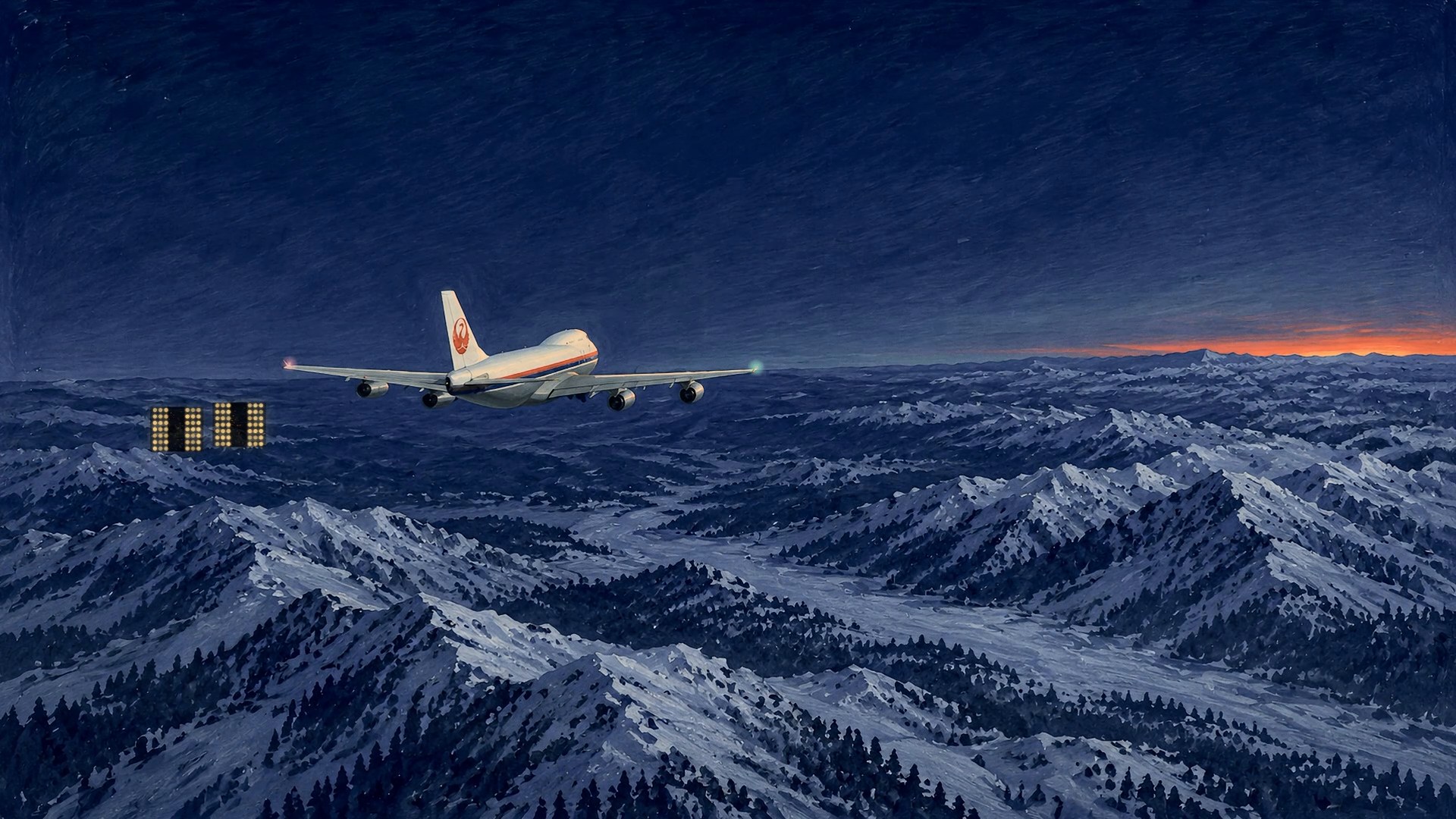
Over eastern Alaska, between Fort Yukon and AnchorageNovember 17, 1986
Alaska, 1986
Case 05 · the filmA Japanese 747 Captain Reported a Giant UFO Over Alaska in 1986 - He Turned Down the Fighter Jets
10 people7 papers from the file6 things the film left out14 sources
On November 17, 1986, at about 5:19 in the evening Alaska time, Japan Air Lines flight 1628, a Boeing 747 carrying French wine from Iceland to Anchorage, asked Anchorage Center about traffic near it. Captain Kenju Terauchi, 47, reported two lights ahead of him, then a third, much bigger shape.
Controller Carl Henley saw a hit behind the jet on his radar, and the Air Force radar center at Elmendorf saw something too. At 5:40 Henley offered to send up the military for a look. The cockpit said: “Negative, negative.” A United jet and an Air Force C-130 came close and saw no other airplane. The 747 landed in Anchorage at 6:20.
The story reached the papers in late December. In March 1987 the FAA said the extra blip was a split radar return from the 747 itself, closed its part of the case and sold the whole file by mail. The film follows the night by the clock on the tape, the captain’s own pages and the crew interviews, and then I checked what was in the sky outside his window.
Negative, negative
November 17, 1986, over Alaska, by the clock on the radio tape, and the months after it. Twenty-two paintings from the film, in order. Skip to the file
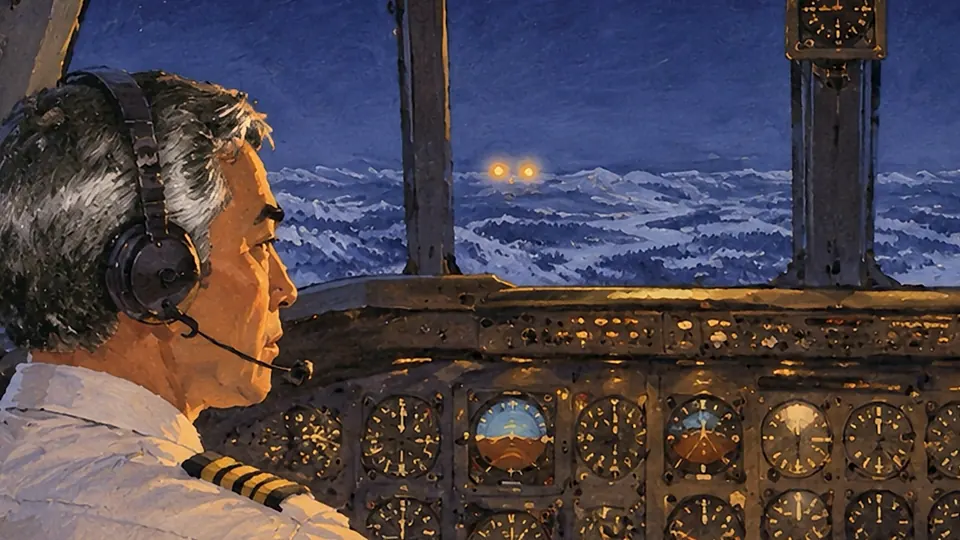
Kenju Terauchi was forty-seven, captain of a cargo 747. Watch from 0:12

Once upon a time, if a hunter saw a TV... Watch from 2:10
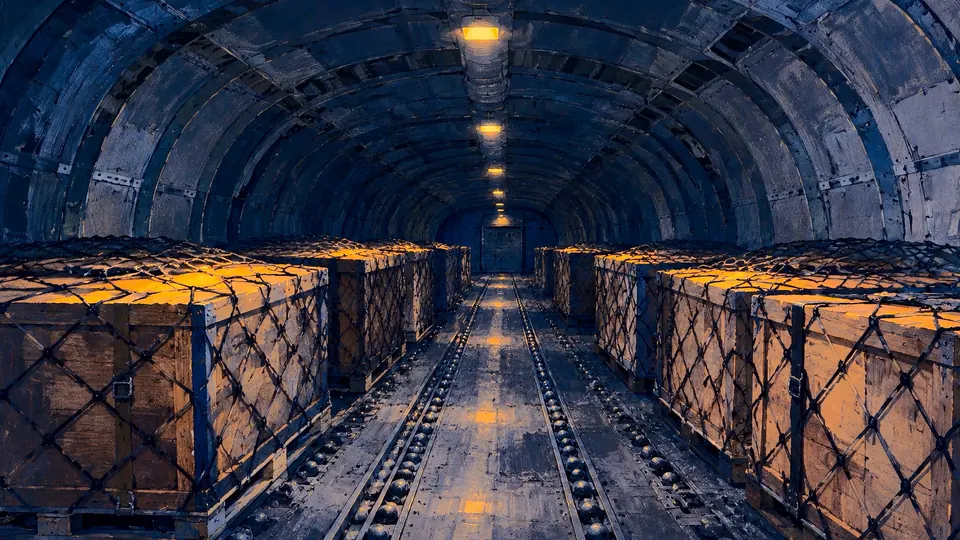
A cargo of French wine, and no passengers. Watch from 2:30
One thin red line on the southwest horizon. Watch from 2:42
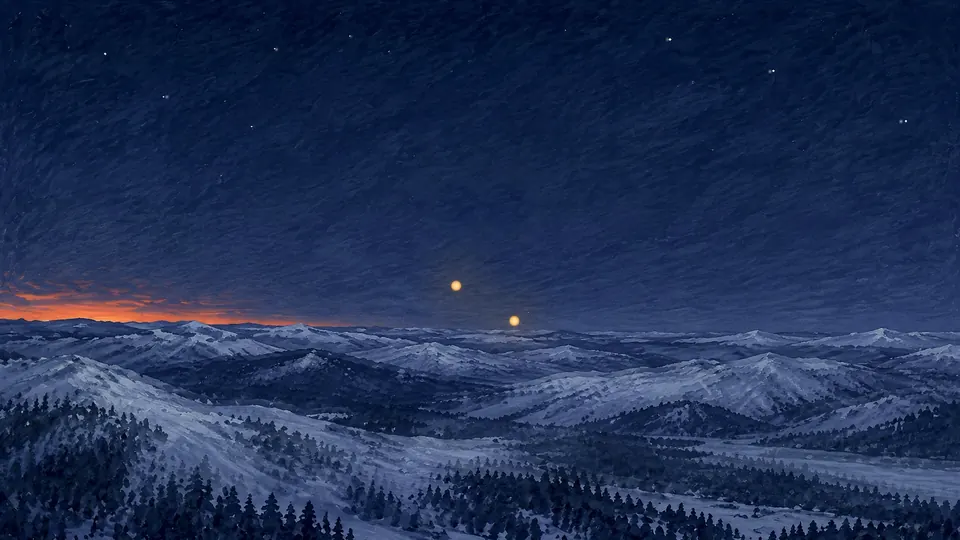
Two lights, ahead on the left, about two thousand feet below. Watch from 3:24
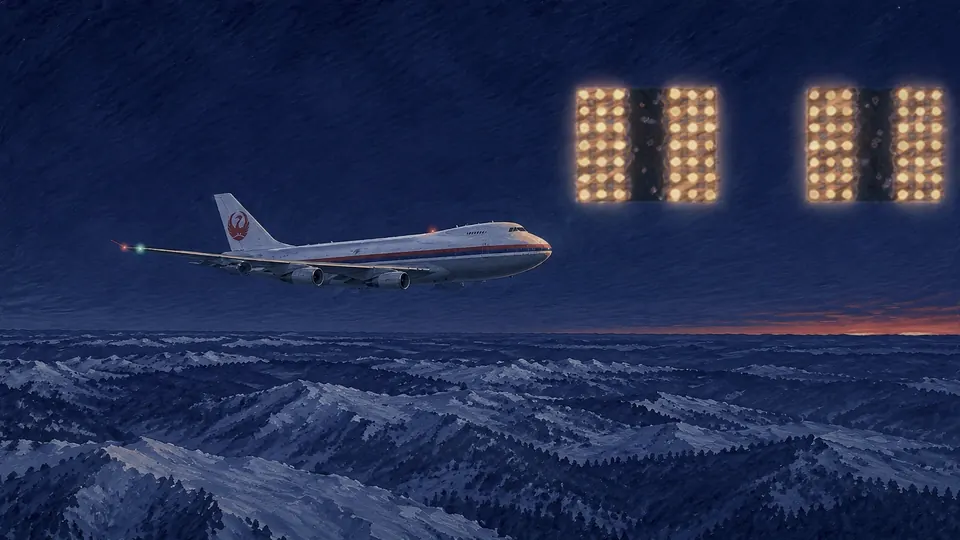
Two of them. In front. About one mile. Watch from 5:24
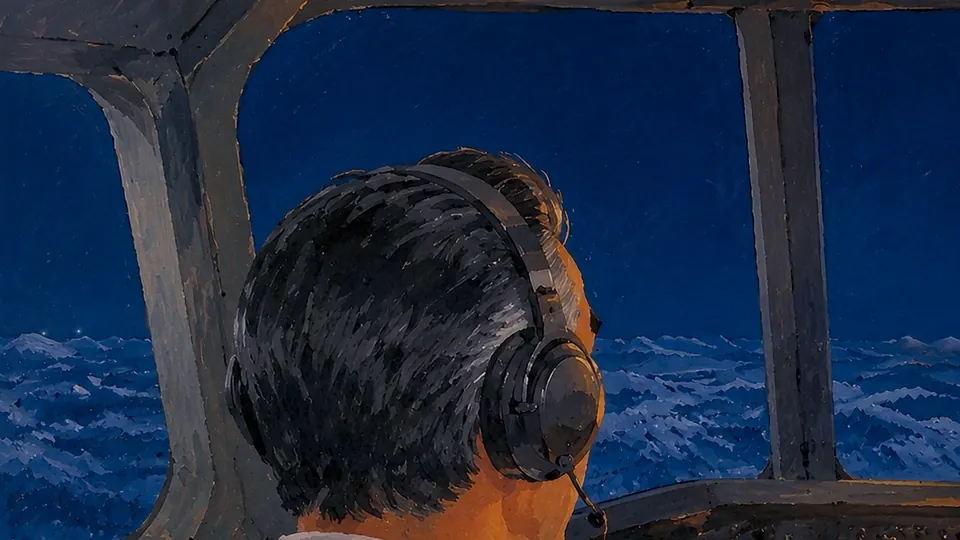
Ahead on the left, eight miles, same level. Watch from 6:48
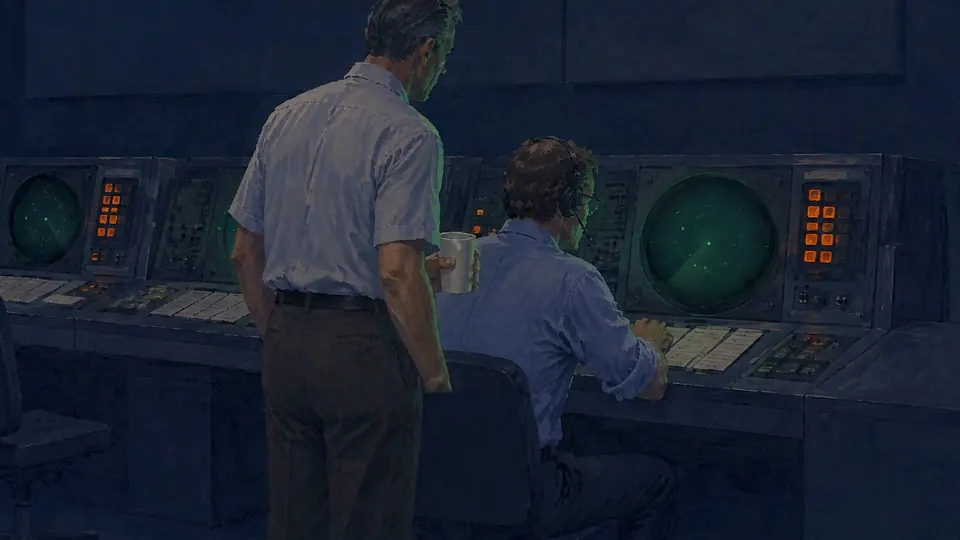
At five thirty a second controller sat down next to Henley. Watch from 7:30
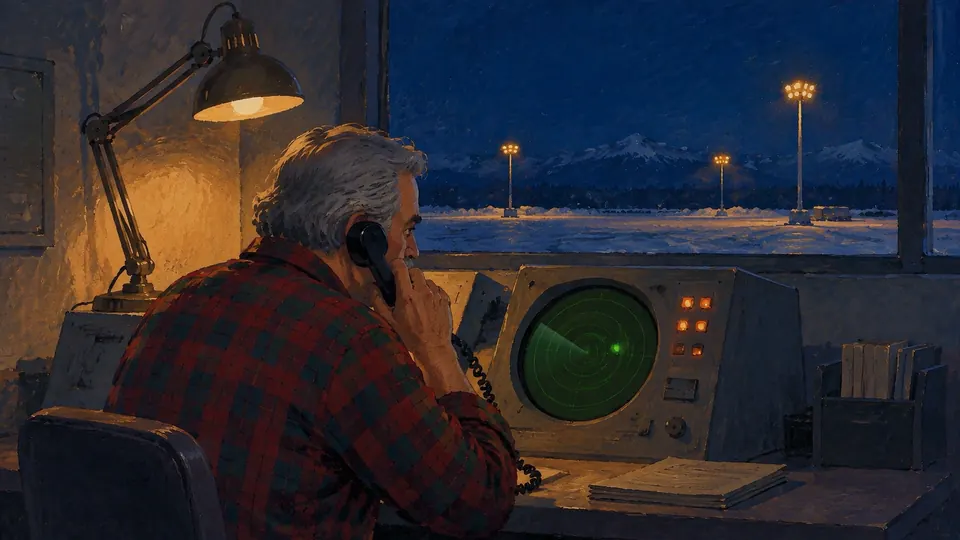
Henley called Fairbanks. It's the only target I see there. Watch from 8:24
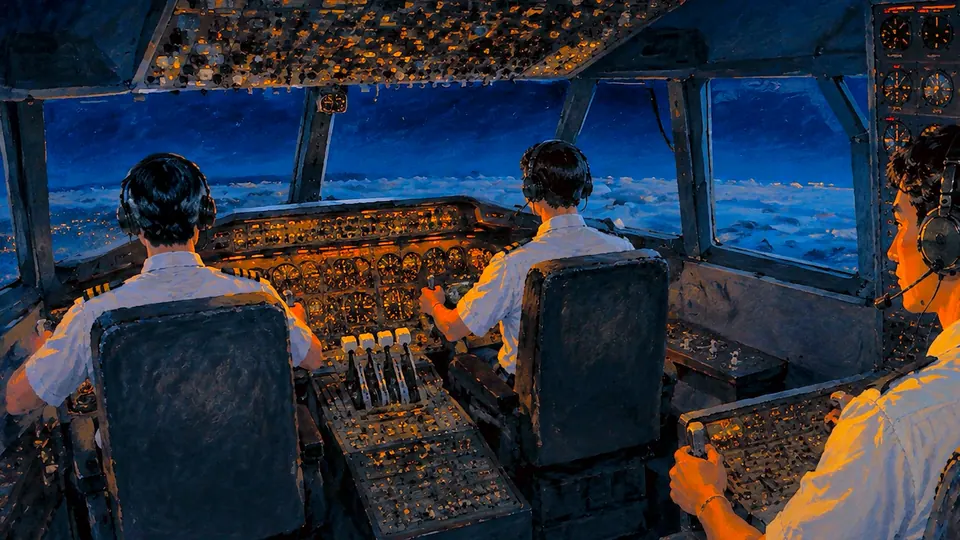
Far ahead, the lights of Eielson and Fairbanks were growing. Watch from 9:12
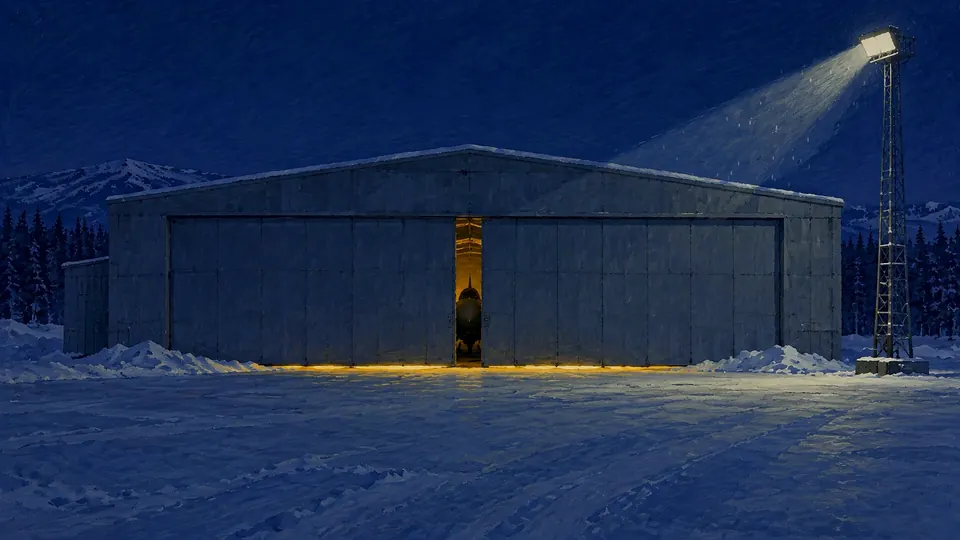
We do have military at Eielson, forty miles away. Watch from 11:24
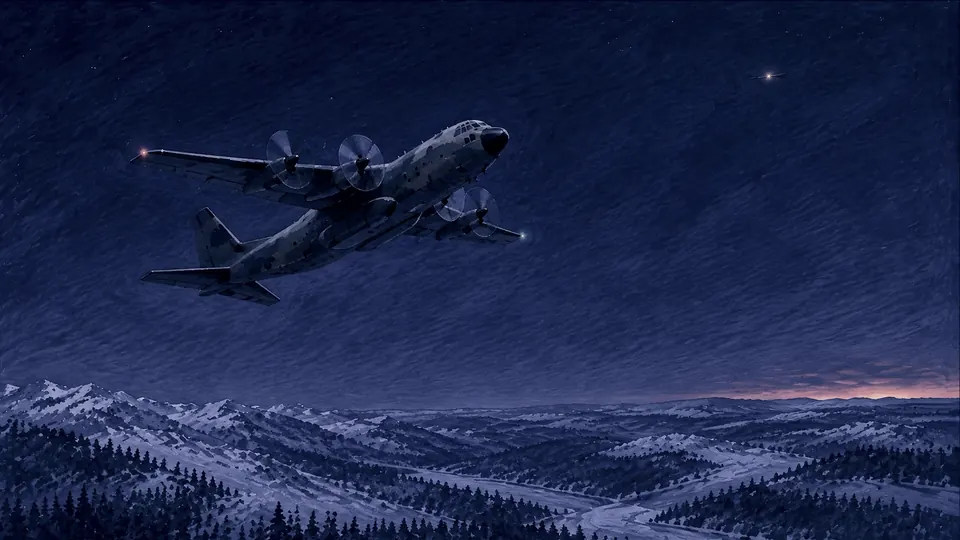
The C-130 had the 747 in sight. No other airplane. Watch from 17:30
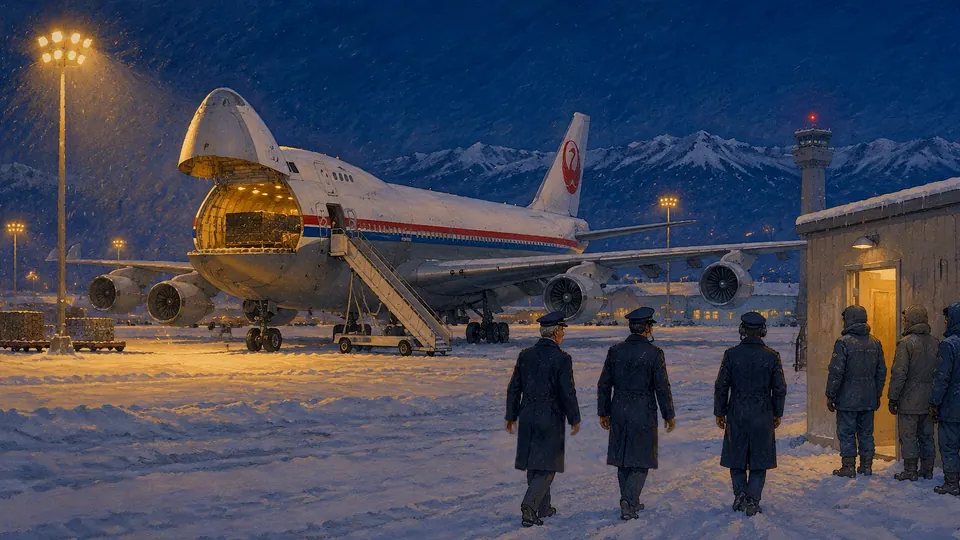
The jet landed in Anchorage at six twenty. Watch from 17:48
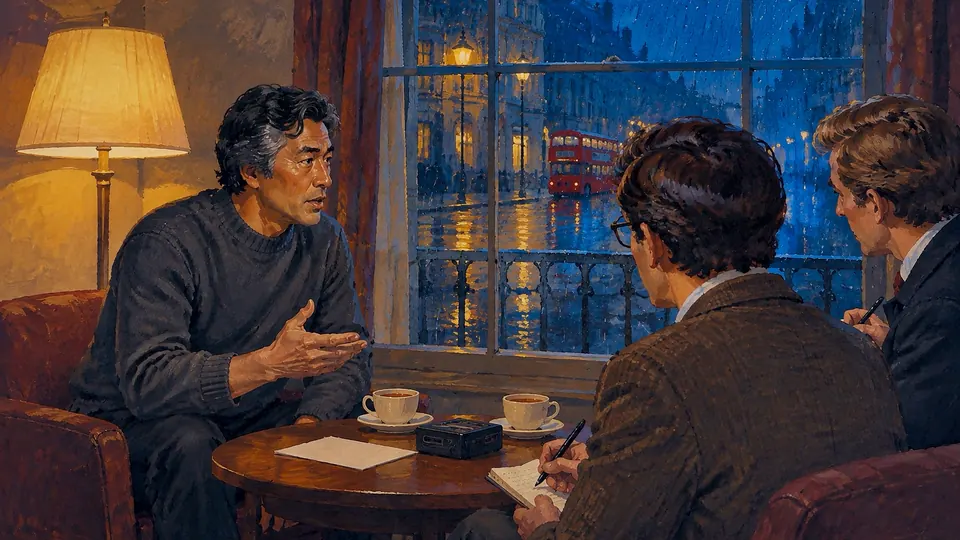
In a London hotel room, two reporters from Kyodo. Watch from 18:24
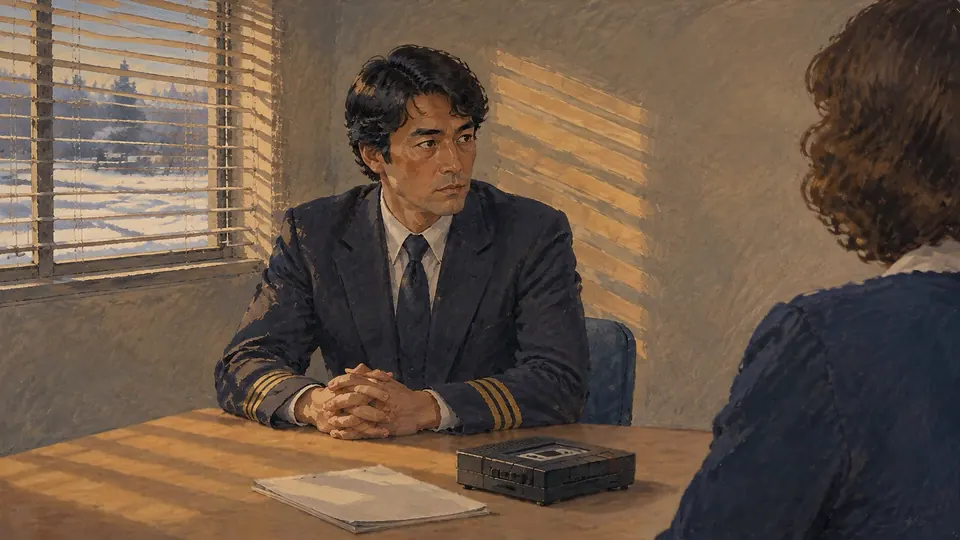
His first officer, Takanori Tamefuji, through an interpreter. Watch from 19:06
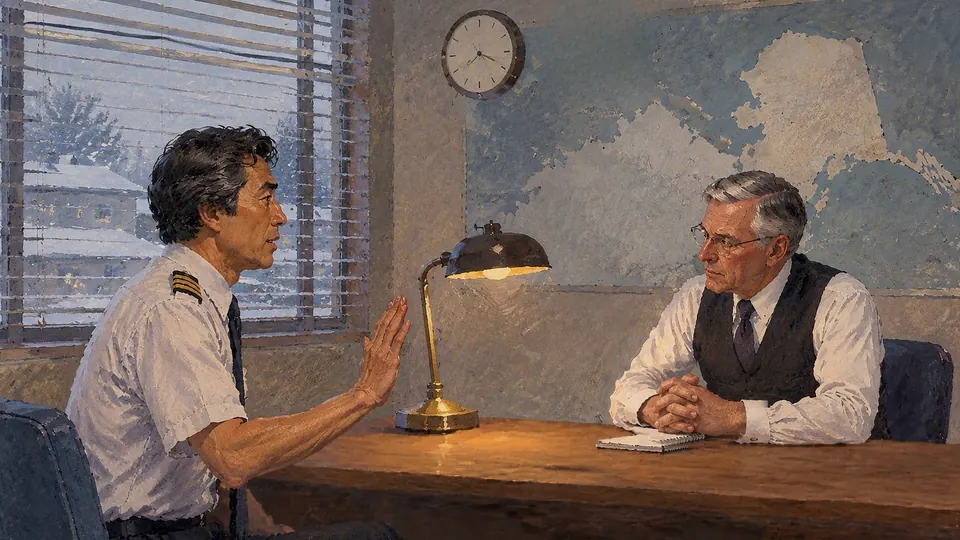
Was it like November? No, no, no similarity. Watch from 21:24
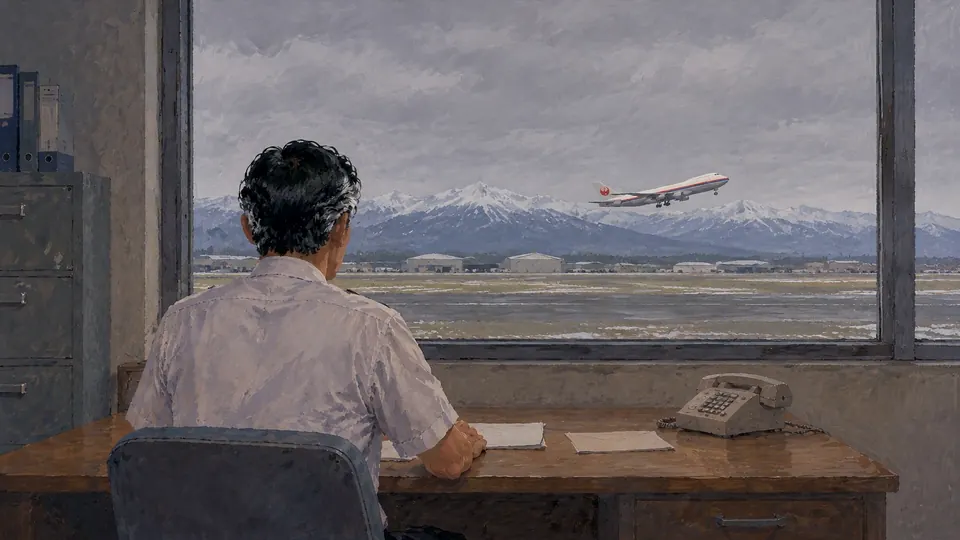
Japan Air Lines took him off flying. Watch from 22:00
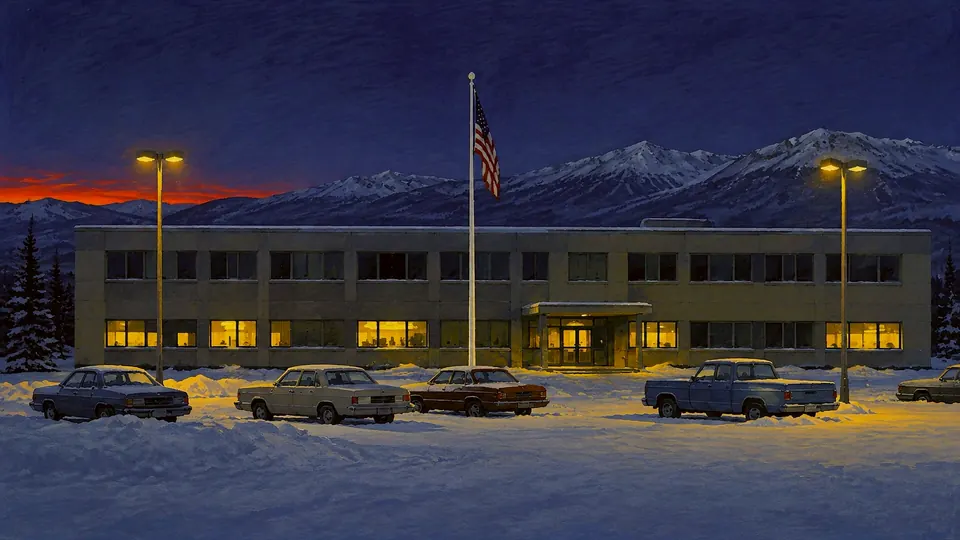
Then the F-A-A sold the case by mail. Watch from 23:00
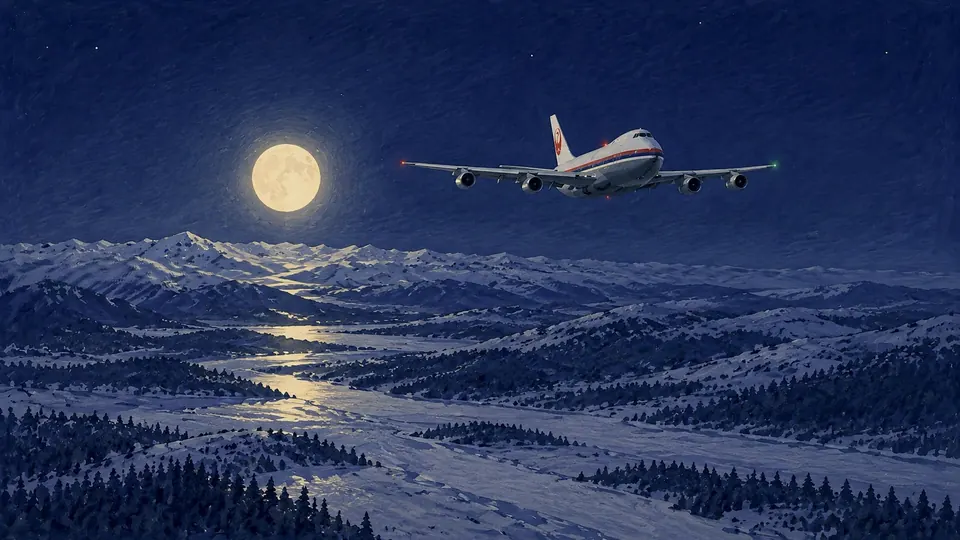
Behind them, low on the left, an almost full moon. Watch from 24:36
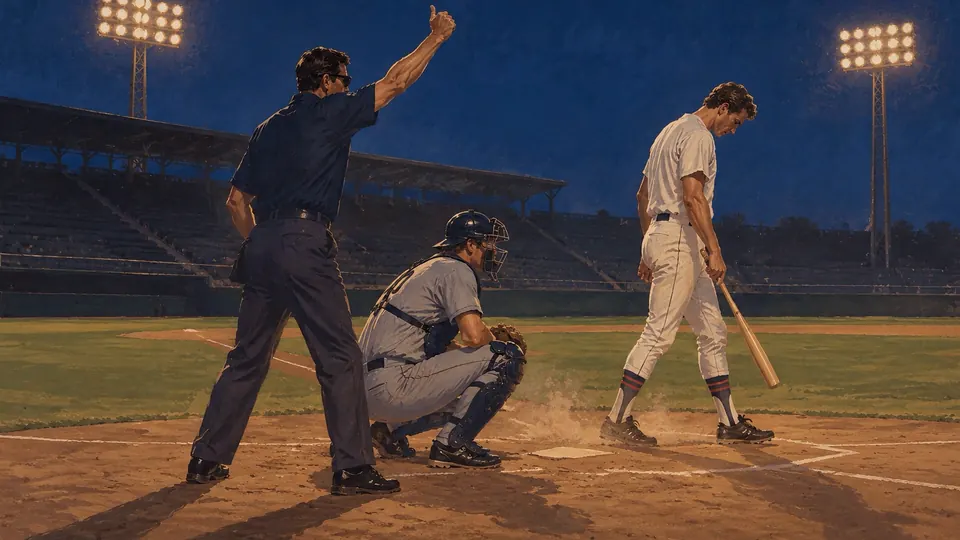
Klass had a rule: three or more, you're out. Watch from 25:00
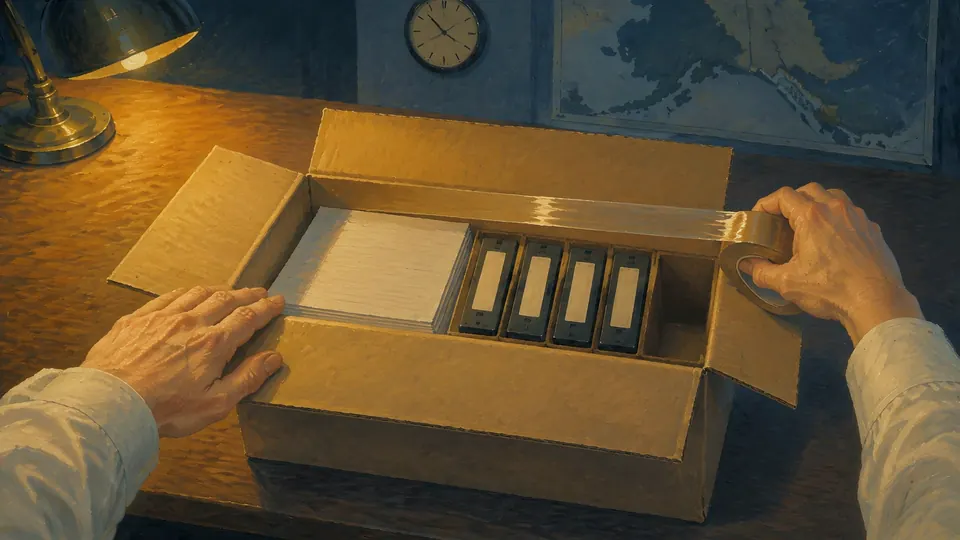
Whatever the military radar recorded never made it into the box. Watch from 28:24

Forty years later, we still argue over the hunter's words. Watch from 29:00
The evening, minute by minute
Built from the FAA radio transcript of Anchorage Center (times on the tape are UTC; Alaska time is nine hours earlier), the controllers' statements and the landing notes.
Over eastern Alaska, at 35,000 feet
The crew asks Anchorage Center: do you have any traffic, seven o'clock above? The answer is negative. Twenty one seconds later the crew reports two traffic in front of them, about one mile.
The cockpit
The crew says they can see navigation lights and strobe lights, white and yellow.
Anchorage Center
The controller sees a hit about five miles behind the jet. The crew answers that the lights are at eleven o'clock, eight miles, same level.
Military radar center at Elmendorf
The military radar reports a primary return it cannot explain, then: it is an unknown, and we've lost contact with it now.
The cockpit
The crew calls it a very quite big plane. Fairbanks approach looks three times and sees only the JAL jet on its scope.
Anchorage Center
The area manager calls U.S. Customs at Anchorage airport about the possibility of a lost aircraft following the jet in.
Near Fairbanks
The controller asks for a full right turn, 360 degrees, and asks the crew to say what the traffic does.
In the turn
The crew reports: it disappeared.
Anchorage Center
The controller offers to send up the military to look at the traffic. The cockpit answers: negative, negative. A moment later the military radar says it has a primary target in trail of the jet.
The cockpit
The crew sees it again: affirmative, nine o'clock.
United flight 69
A United jet is turned toward the 747. Its pilot sees the JAL plane against a light sky and its contrail, and no other airplane.
The cockpit
The crew reports they can no longer see the UFO.
Totem 71, an Air Force C-130
The military cargo plane, already in the air, comes up close and has the 747 in sight. Asked about other traffic: not flashing any lights at this time.
Anchorage International Airport
The 747 lands. The FAA transcript gives the landing only as approximate, about 03:23 UTC. FAA agents interview the crew that same evening.
Who was there
Kenju Terauchi
captain, 47
He flew the cargo 747 that carried French wine from Iceland to Anchorage. UPI wrote he had been a pilot for 29 years. He wrote a long account of the night called Meeting the Future and drew what he saw.
“We were carrying Beaujolais, a very famous wine made in France. Maybe they want to drink it.”
“We turned the offer down quickly.”
LaterOn January 11, 1987 he reported lights again in the same general area. Three accounts say he was grounded and later flew again: eight months later, three months later, or years later. I could not find a JAL paper for any of them.
Takanori Tamefuji
first officer, right seat
From the right seat he saw the lights for about ten minutes, then lost them. The FAA interviewed him on January 5, 1987.
“I am certain that I saw something. It was clear enough to make me believe that there was an oncoming aircraft.”
Yoshio Tsukuba
flight engineer
He said the lights looked like the windows of a passenger plane. Of the second sighting he was not certain: lights of a distant town or a strange object. He did not see the big ship. He made a drawing for the FAA on January 15, 1987.
Carl E. Henley
controller, Anchorage Center
He worked the jet alone until about 5:30, then kept the radio while a second controller took the other seat. He checked with the military radar center.
“ROCC did have primary target in the same position JL1628 reported.”
Samuel J. Rich
controller, Anchorage Center, from about 5:30
He asked the military radar center if they had aircraft to send up.
“I asked ROCC if they had any aircraft to scramble on JL 1628, they said they would call back. However, there was no further communication regarding the request for a scramble.”
Erland D. Stephens
area manager in charge, Anchorage Center
At 5:33 he called U.S. Customs at the airport about a possible lost aircraft following the jet.
Ronald Mickle
FAA Security agent
He interviewed the crew in the JAL office in Anchorage on the night of the landing and marked their route on a map.
“Through a confidential source at Japan Airlines, it was stated to me that this was not the first sighting of an unidentified aircraft by Captain TERAUCHI.”
James Derry
FAA Security manager
He sat in on the first interview. His notes carry the captain's drawing dated November 17, and he wrote that nothing was different with the cargo except some expensive wine.
Paul Steucke
FAA spokesman in Alaska
He confirmed the story to the Japanese press, mailed out the list of materials with prices, and signed the page saying the FAA had not checked stars or planets.
“We asked him point-blank if this was like the Nov. 17 sighting, and he said, 'No, no, there's no similarity between the two.'”
Philip Klass
skeptic and writer
He argued the captain was looking at Jupiter, with Mars nearby. In a letter to the FAA he called the captain a UFO repeater.
“Especially that Capt. Terauchi had two previous UFO sightings, which makes him a "UFO Repeater".”
The paper trail
The captain's drawings, the agent's route map and three FAA sheets from the file the agency sold by mail in 1987. Open a sheet to read it.
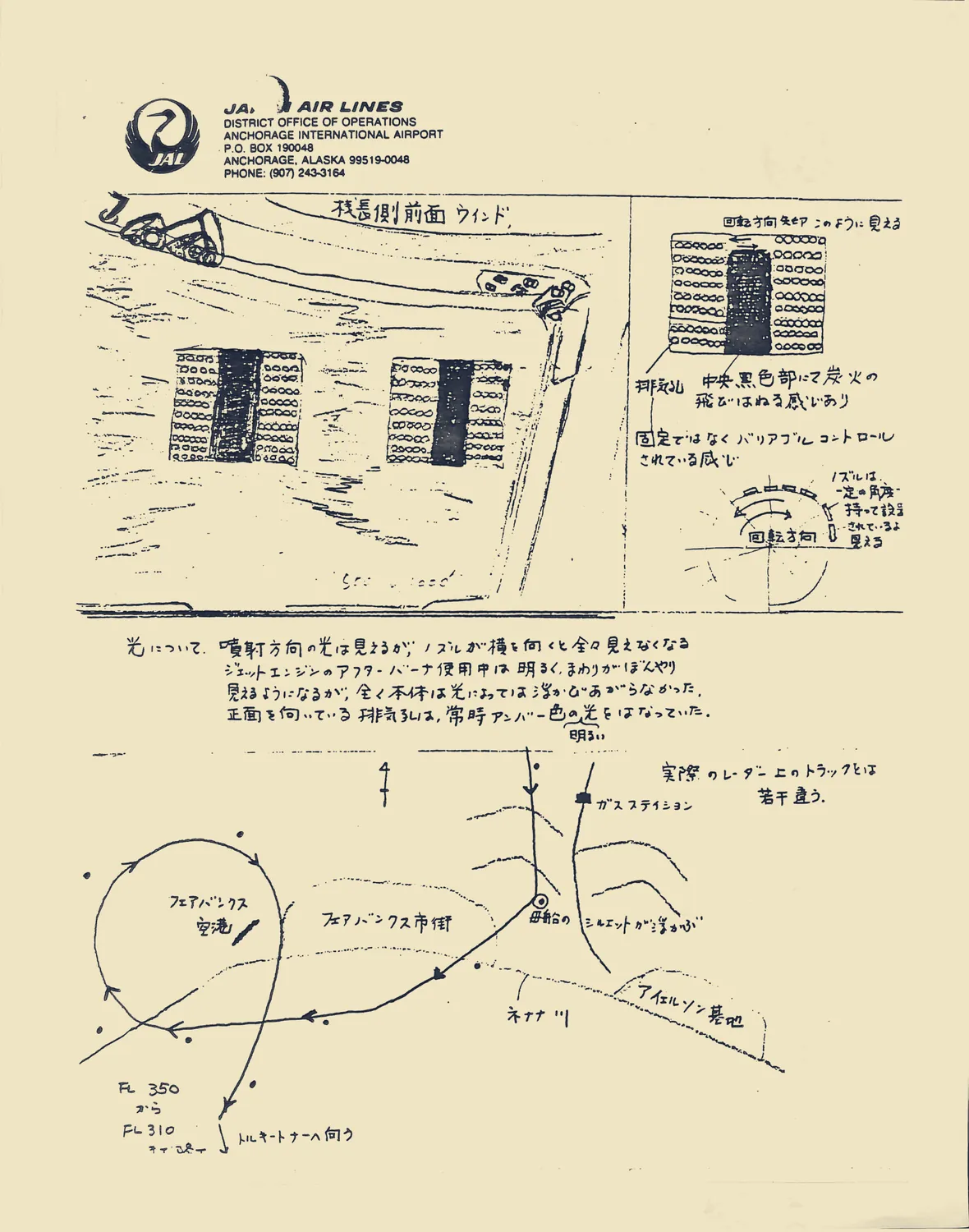
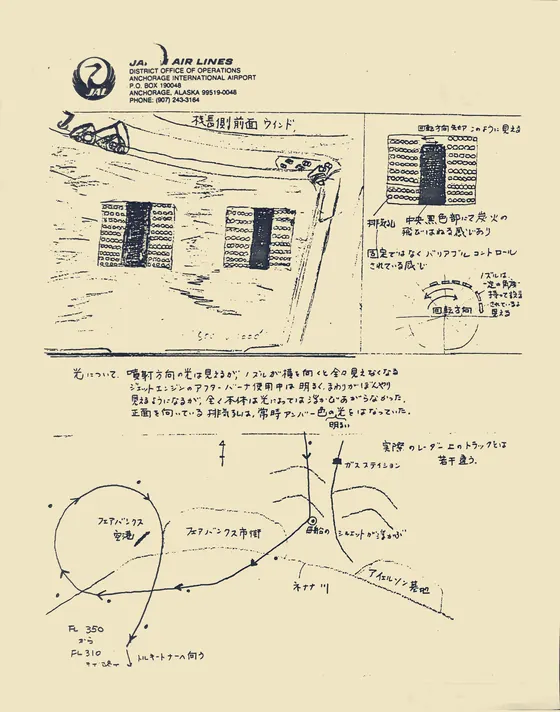 Two blocks of lightsDrawing by the captain, from the FAA file. One of two sheets with his written account, received January 2, 1987.
Drawing by the captain, from the FAA file · With his written account, received by the FAA on January 2, 1987
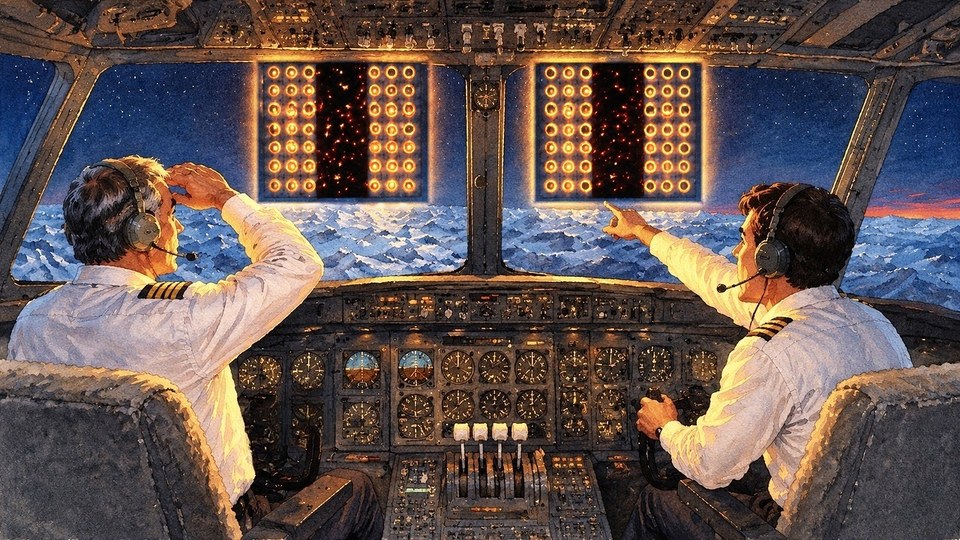
Two blocks of glowing rings seen through the windshield, with a note on how they turned. Below, a small map near Fairbanks with the 360 degree loop. The notes are in Japanese.
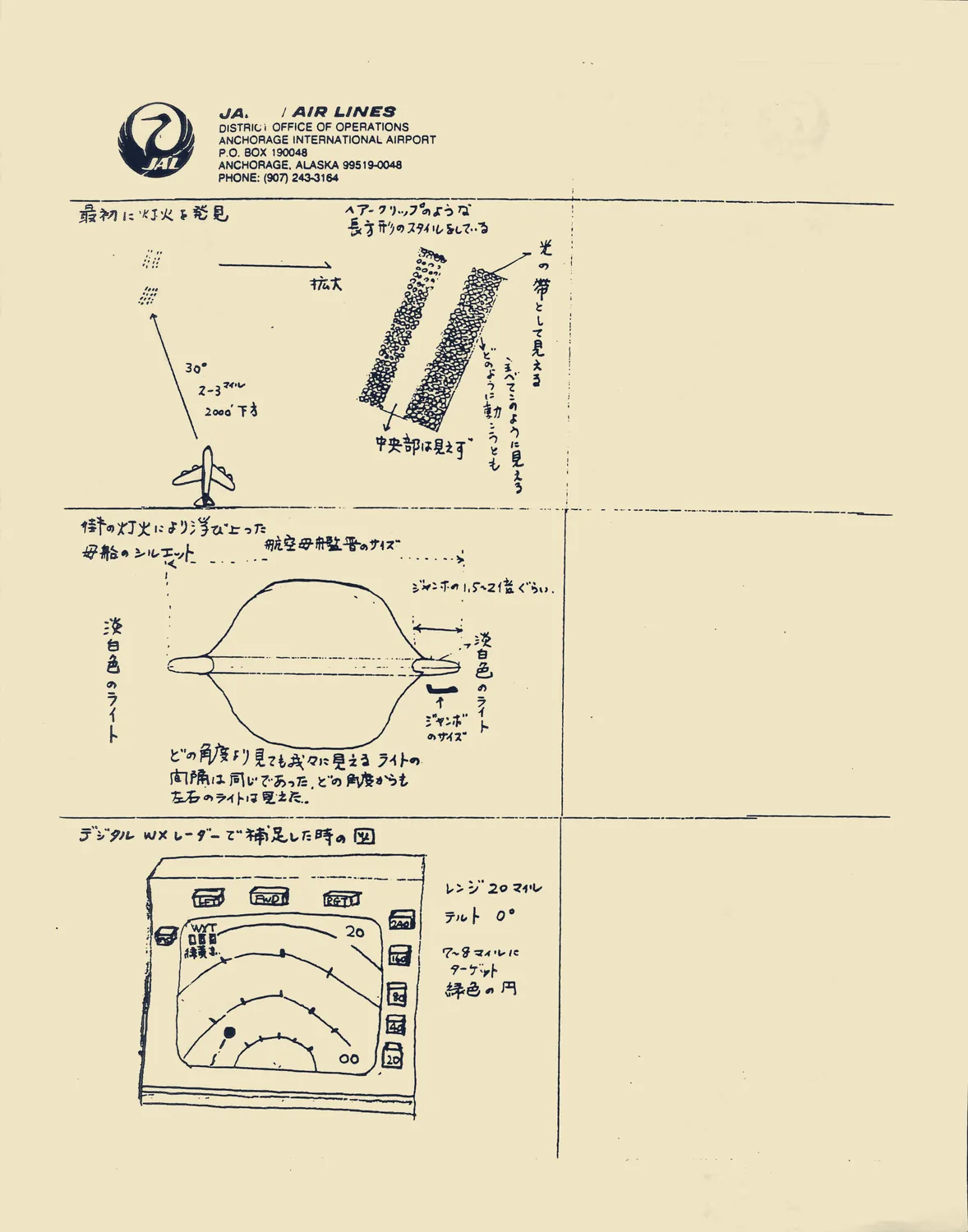
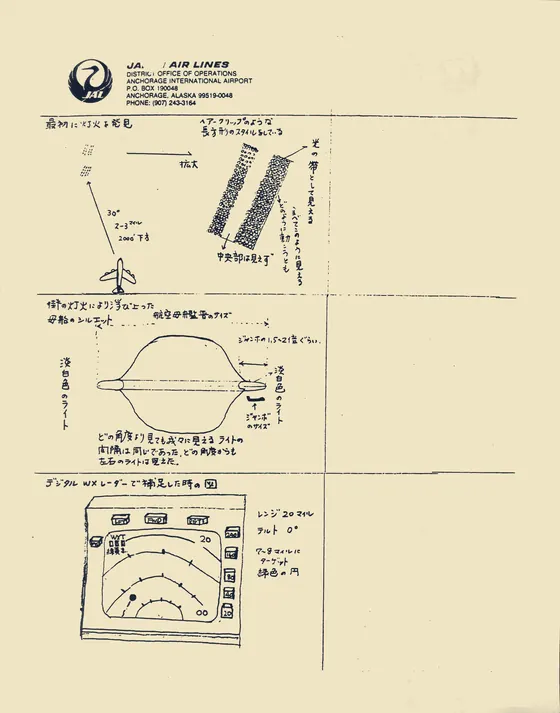 “The size of an aircraft carrier”Drawing by the captain, from the FAA file. The big shape, a jumbo jet for scale, and his weather radar.
Drawing by the captain, from the FAA file · With his written account, received by the FAA on January 2, 1987
Two grids of lights and a huge oval shape with a belt, a small jumbo jet drawn for scale, and a radar screen with a dot at seven to eight miles. His notes in Japanese say the size of an aircraft carrier, about one and a half to two times a jumbo.
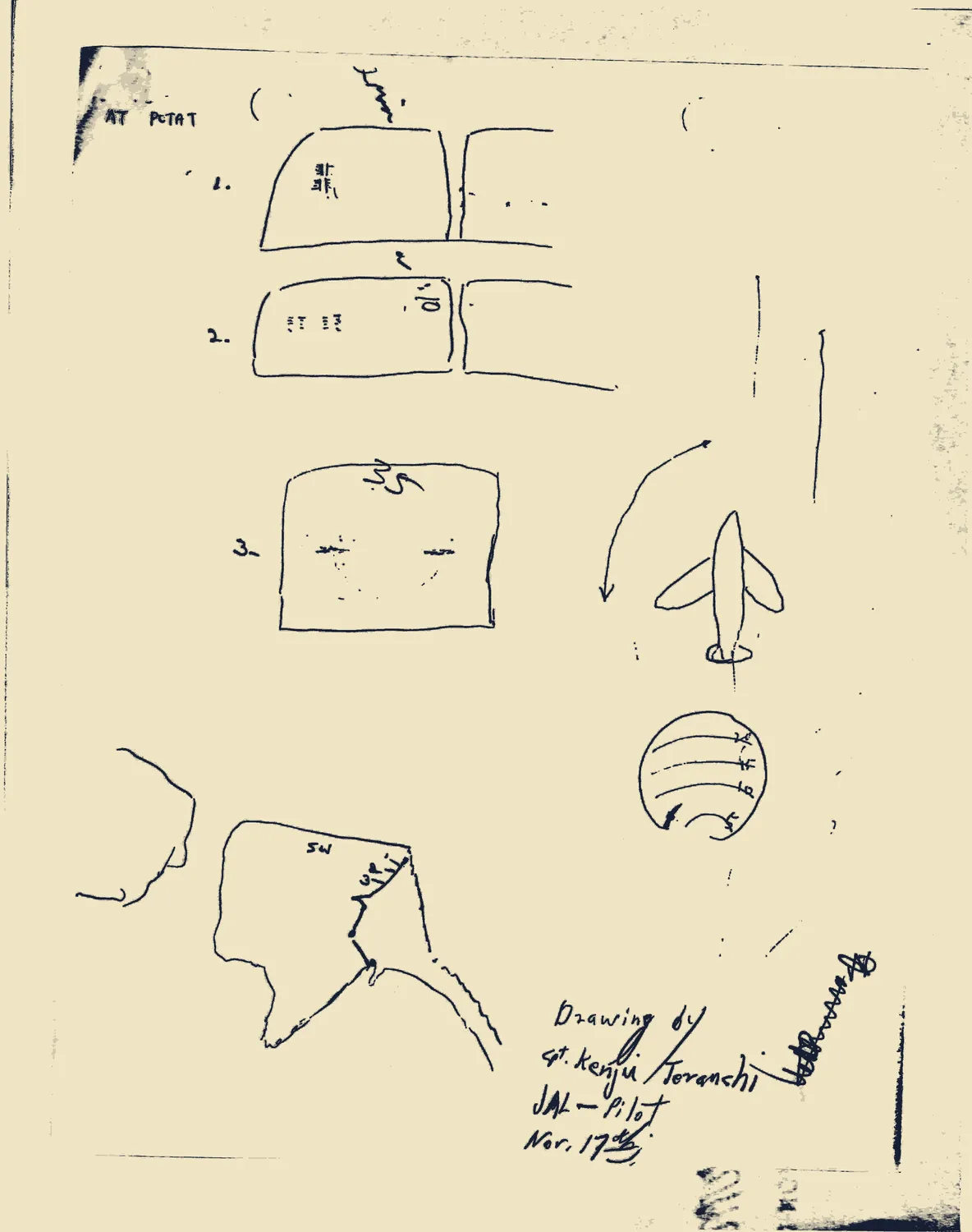
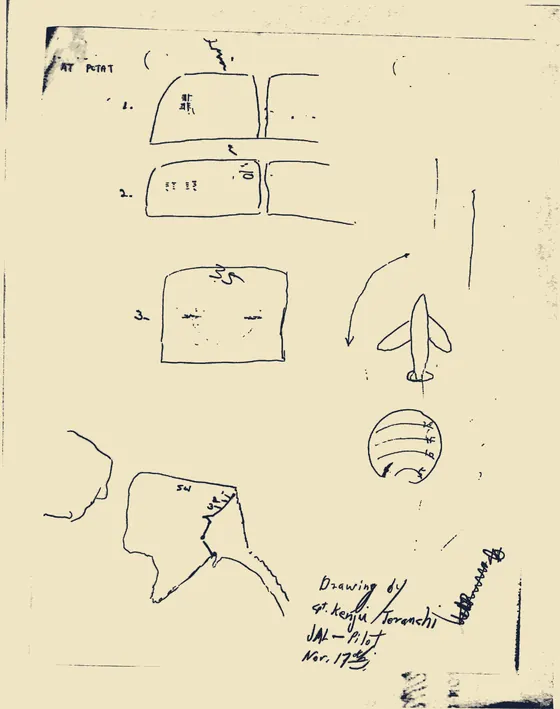 The sheet from the night of the landingDrawing by the captain, from the FAA file, marked November 17: three sketches of the windshield.
Drawing by the captain, attached to the notes of FAA Security manager James Derry · November 17, 1986, the night of the landing
Three sketches of the windshield, the plane with its turn, a ball with stripes and an outline of Alaska. It is the only drawing dated by its author.
Drawing by Capt. Kenju Teranchi, JAL-Pilot, Nov. 17th
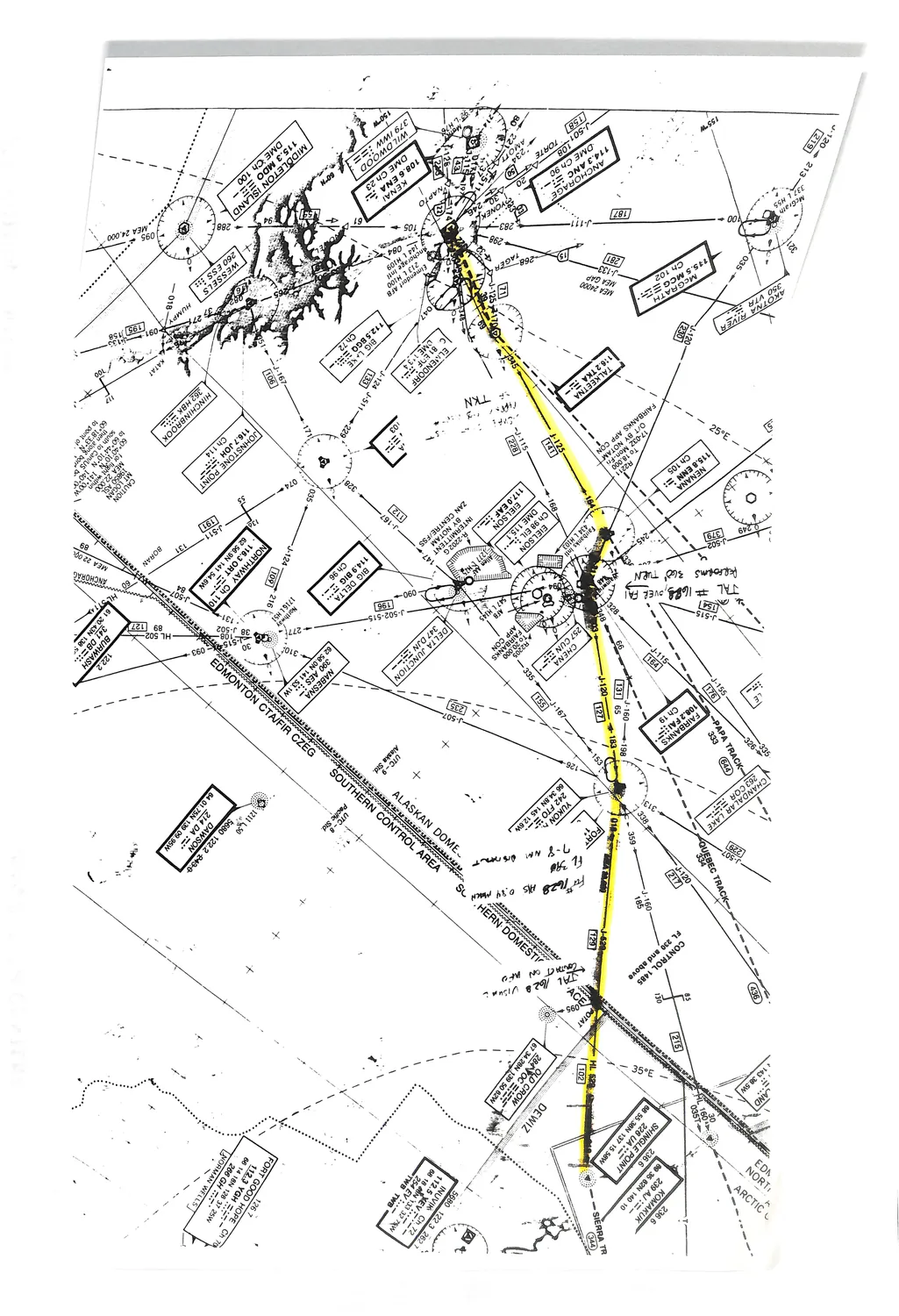
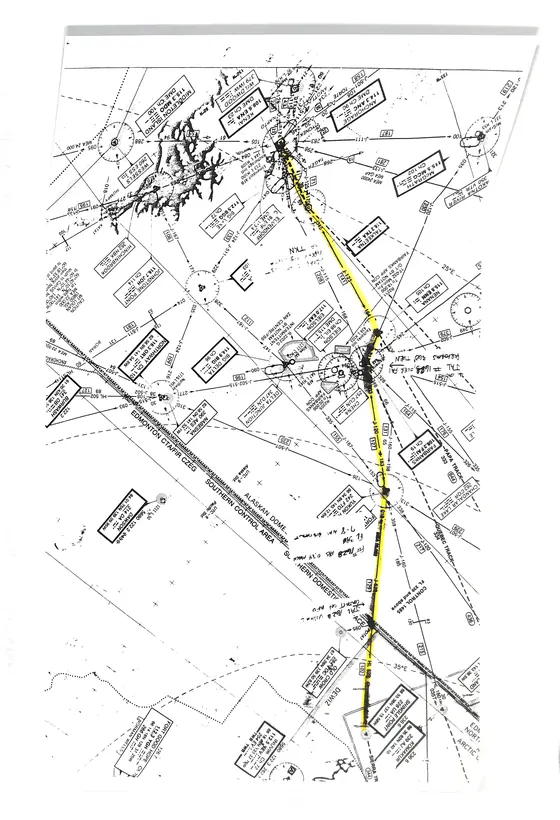 The route over AlaskaMarked by an FAA agent from the captain's statement, November 17, 1986.
FAA Security agent Ronald Mickle, from the captain's statement · November 17, 1986
A map of Alaska with the route marked in yellow: from the border past Fort Yukon, over Fairbanks, down to Anchorage. The captain did not draw it.
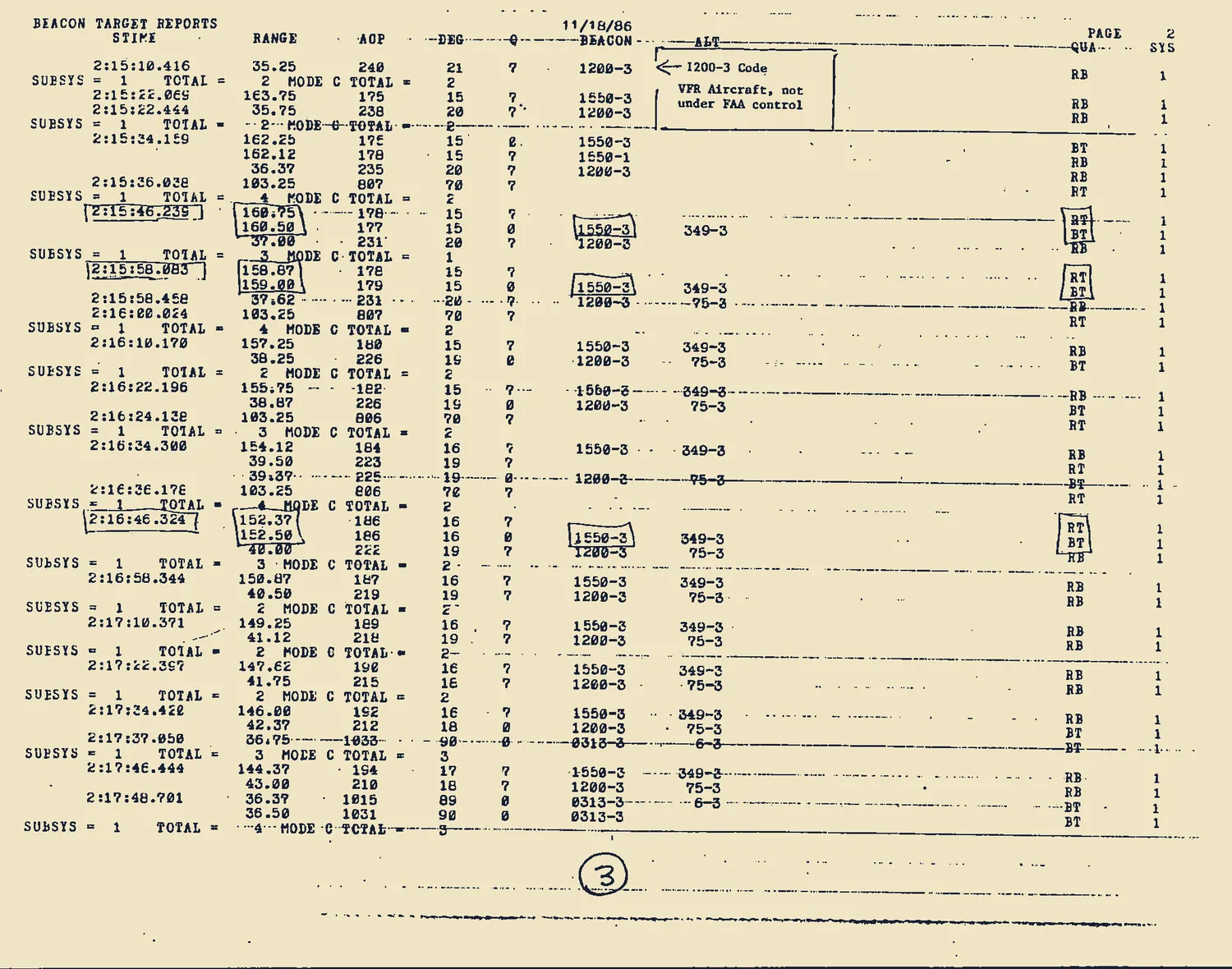
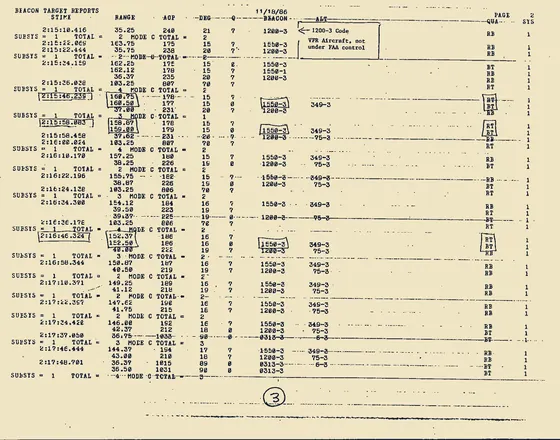 The recorded radar dataA page of the FAA printout for that evening, replayed by its specialists.
FAA, Anchorage Center radar data · Data of November 18, 1986, UTC
A page of the computer print of beacon target reports from that evening. An FAA analyst later found that 72 percent of the returns had the radar and the jet's own beacon in the same cell.
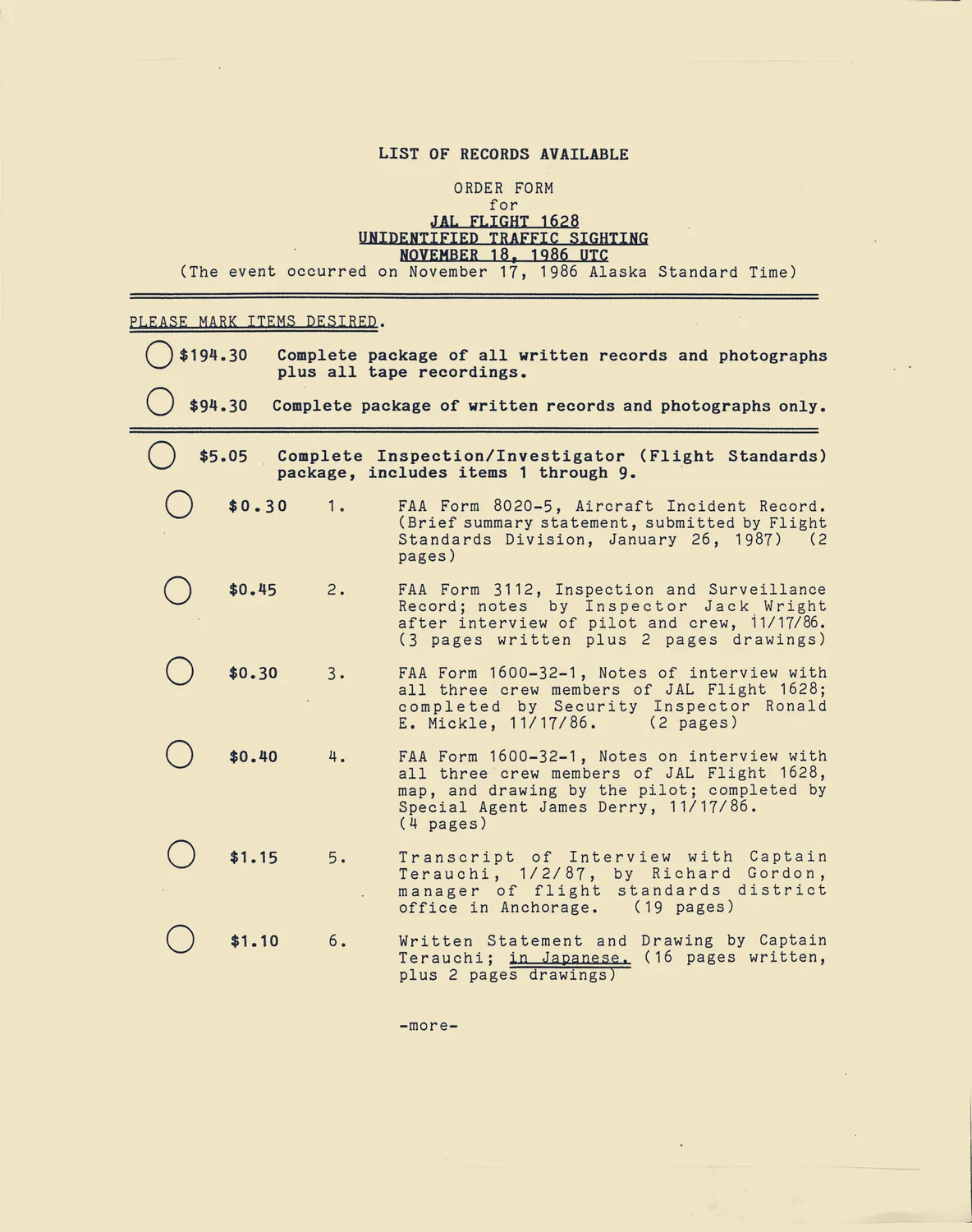
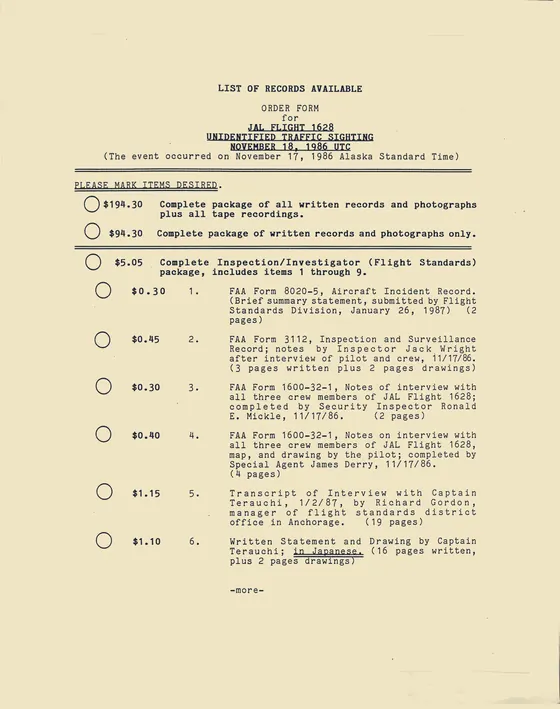 The case by mailThe FAA order form, 1987. Every document and every tape: $194.30.
Paul Steucke, FAA Alaskan Region · February 21, 1987
The list of 20 items anyone could order by mail. The full package with tapes cost $194.30, without tapes $94.30.
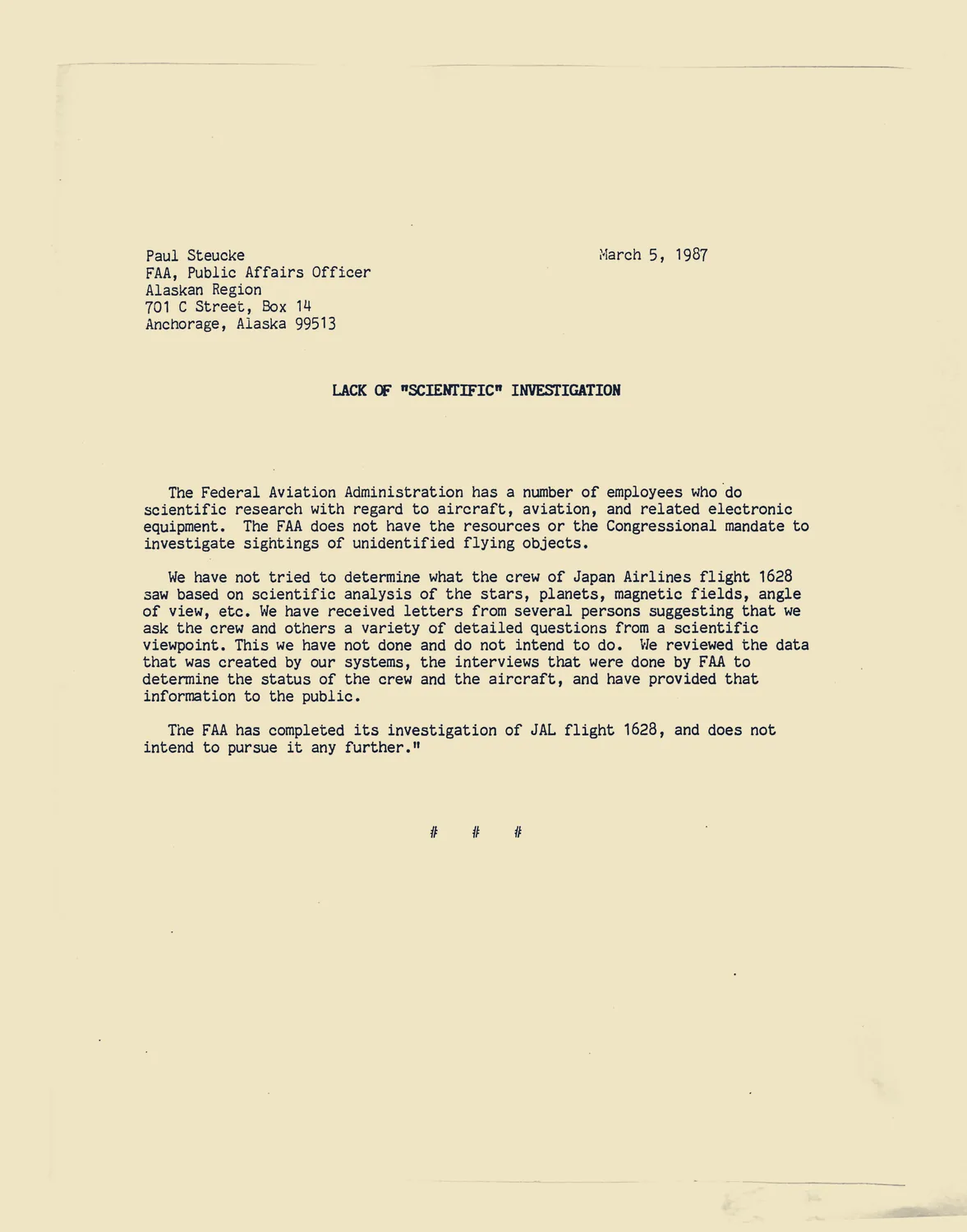
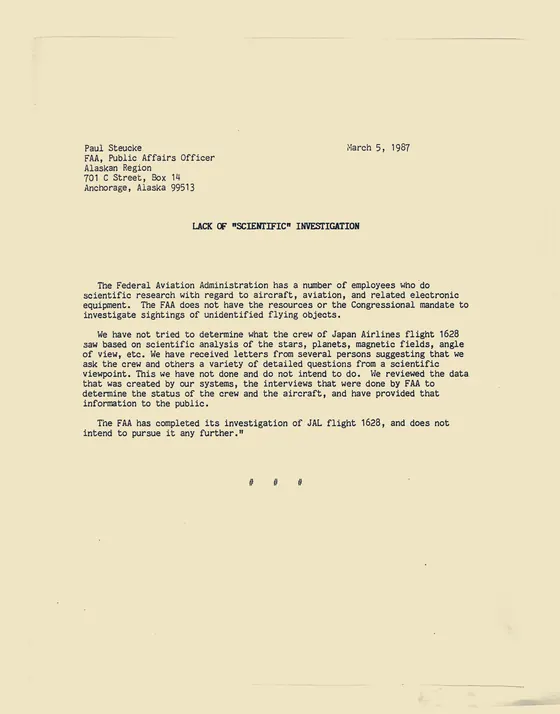 “Lack of ‘Scientific’ Investigation”FAA, March 5, 1987: the agency did not check the stars or the planets.
FAA, Paul Steucke · March 5, 1987
The page titled Lack of 'Scientific' Investigation: the FAA did not check stars, planets or magnetic fields.
has completed its investigation and does not intend to pursue it any further
Drawings by the captain, from the FAA file · FAA documents, 1986 to 1987, public record · scans: FAA package on the Internet Archive and The Black Vault
What the film leaves out
Things I found in the papers that did not fit into the film.
Why he said no
In his written account the captain says he remembered a U.S. fighter called the Mustang that once climbed after an unknown object and crashed. That was Captain Thomas Mantell, who died in an F-51 Mustang in Kentucky in January 1948. The Air Force report said the object was in no way directly responsible.
The fighters were not next door
The controller said there was military at Eielson, forty miles away. In 1986 Eielson flew A-10 attack planes and OV-10s, not interceptors. The plane that came was a C-130 cargo plane already in the air.
Customs was told
At 5:33 the area manager called U.S. Customs at Anchorage airport about a possible lost aircraft following the jet in.
The tapes are gone
The FAA once listed the radio tape at an hour and a half and the crew interviews on tape. A 2009 FOIA letter in the archive says the recordings were destroyed. The military radar recording was never in the box.
More orders than the KAL crash
AP reported more than 200 requests from the press and 46 from private people for the package, more than after the downing of Korean Air 007 in 1983.
Other lights in the same file
The FAA package has a section on other sightings in Alaska. One is an Alaska Airlines 737 on January 29, 1987, with a target on its own radar at 25 miles; the crew saw nothing outside.
The explanations, weighed
A split radar return
For it
- In March 1987 the FAA said the second target was a split radar return from the 747 itself.
- An FAA analyst found about 61 minutes of data looked normal: most uncorrelated returns sat within an eighth of a mile of the jet.
- In December 1986 the Anchorage Center manager wrote that its radar data did not confirm the traffic.
- Fairbanks saw only the JAL target.
Against it
- The military radar center reported a primary target in trail of the jet and, at one point, a flight size of two.
- Controller Henley wrote that the military had a target in the same position the crew reported.
- A later compilation argues a split image cannot explain targets at five and fifty miles.
Jupiter, Mars and the Moon
For it
- Philip Klass said the light was Jupiter, very bright, about 10 degrees up on the left, with Mars lower and to the right.
- I ran the sky for 5:19 p.m.: Jupiter stood about 11 degrees up at half past nine, Mars lower and to the right.
- A Moon 98 percent full sat behind the jet, about 11 degrees up, near the six o'clock position, when the crew first asked about traffic at seven o'clock above.
- The United jet and the C-130 saw no other airplane.
Against it
- A planet does not make a radar hit, and the military radar reported one.
- A MUFON astronomer said Jupiter does not explain two rows of lights and a third object.
- The crew reported the lights at eleven o'clock and at the same level, not only on the left.
Lights on the ground
For it
- In his own account the captain explains part of the lights as an Alaska pipeline pump station.
- The engineer was not sure if the second lights were a distant town.
- For the January 11 sighting the FAA said ice crystals were most likely.
Against it
- The crew reported the lights at their own altitude.
- The military radar reported an unknown primary return.
He was punished for talking
For it
- Three later accounts say JAL grounded him and gave him a desk job.
Against it
- The three accounts do not agree: eight months, three months, or years.
- I could not find a JAL order or a medical paper.
- On January 5, 1987 the New York Times wrote he was on a flight to Europe.
A secret meeting in Washington
For it
- John Callahan, an FAA division chief at the time, said in 2000 that the FAA briefed the FBI and the CIA and was told the meeting never took place.
Against it
- It is one man's account, fourteen years later.
- There are no documents. I did not find the meeting in the pages of the package I read.
Watch the film
 Watch on YouTube · 29 min
- Negative, NegativeWatch from 0:00
- Two Lights on the LeftWatch from 1:46
- Sector FifteenWatch from 4:00
- Very Quite Big PlaneWatch from 7:56
- The TurnWatch from 10:25
- The MustangWatch from 12:53
- United Sixty-NineWatch from 15:35
- Two SeatsWatch from 18:19
- The Case by MailWatch from 22:08
- So I CheckedWatch from 24:16
- In Sight, Same PositionWatch from 27:27
What the film rests on
The sources the script was checked against.
- The FAA package on JAL flight 1628 (1987): the radio transcript, the crew interviews, the controllers’ statements, the radar memos, the captain’s written account and drawings.Internet Archive, public domain · archive.org
- The same FAA documents, file by file.The Black Vault · documents.theblackvault.com
- Glen Harper’s compilation for MUFON (1995), with copies of the FAA papers, the press of the time, Bruce Maccabee’s and Philip Klass’s papers.NICAP · nicap.org
- The FAA’s list of materials for sale, with prices, February to March 1987.NICAP · nicap.org
- UPI and AP reports, December 1986 and January 1987, as reprinted in the compilation above.Newspapers, through a later reprint
- FAA transcript of Anchorage Center, 02:14 to 02:59 UTC, with the Gates memo of January 9, 1987The Black Vault, FAA file 733667-001-015 · documents.theblackvault.com
- Air Traffic package with the Chronology of Events, December 18, 1986The Black Vault, FAA file 733667-001-012 · documents.theblackvault.com
- Written statements of seven Anchorage Center controllers and managersThe Black Vault, FAA file 733667-001-018 · documents.theblackvault.com
- Other Unidentified Air Traffic sightings, FAA file, AlaskaThe Black Vault, FAA file 733667-001-024 · documents.theblackvault.com
- Philadelphia Inquirer Magazine, May 24, 1987, reprint of the captain's drawingsThe Black Vault, FAA file 733667-001-020 · documents.theblackvault.com
- John Callahan, testimony for the Disclosure Project, 2000UFO Evidence · ufoevidence.org
- Bruce Maccabee, article in the International UFO Reporter, March and April 1987Reprinted in the 1995 compilation above
- New York Times, January 5, 1987Newspaper
- Fuji TV report on the case, October 16, 2024Japanese television
Full list: what is real on screen, and what was re-set
Real material
- The captain’s drawings and the FAA sheets in the paper trail belowFederal Aviation Administration file, 1987 · public record
- FAA radar data table and list of materials with pricesFederal Aviation Administration · public domain
Photographs under a Creative Commons licence are also credited on screen where they appear.
Re-set or drawn for the film
- The route maps in the film are drawn for it from the FAA route and the radio tape.
- Quotes from the tape and the interviews are set in type for the film from the FAA transcripts.
The illustrations are paintings made for this video, and the narration is a synthetic voice.
Corrections: none filed for this case so far. How corrections work
The military radar recording never made it into the box. If this case was worth a coffee to you, it helps me keep reading the files for the next one.
Support the next case file